
The Government of India will introduce the biggest GST reform since 2017 on 22 September 2025. Popularly called GST 2.0, this reform aims to simplify the tax structure, reduce the burden on common people, and make compliance easier for businesses.
The new GST changes will directly impact household expenses, healthcare, automobile prices, and the overall economy. With a reduced number of tax slabs and the removal of GST from essentials, this move is expected to boost consumption ahead of the festive season.
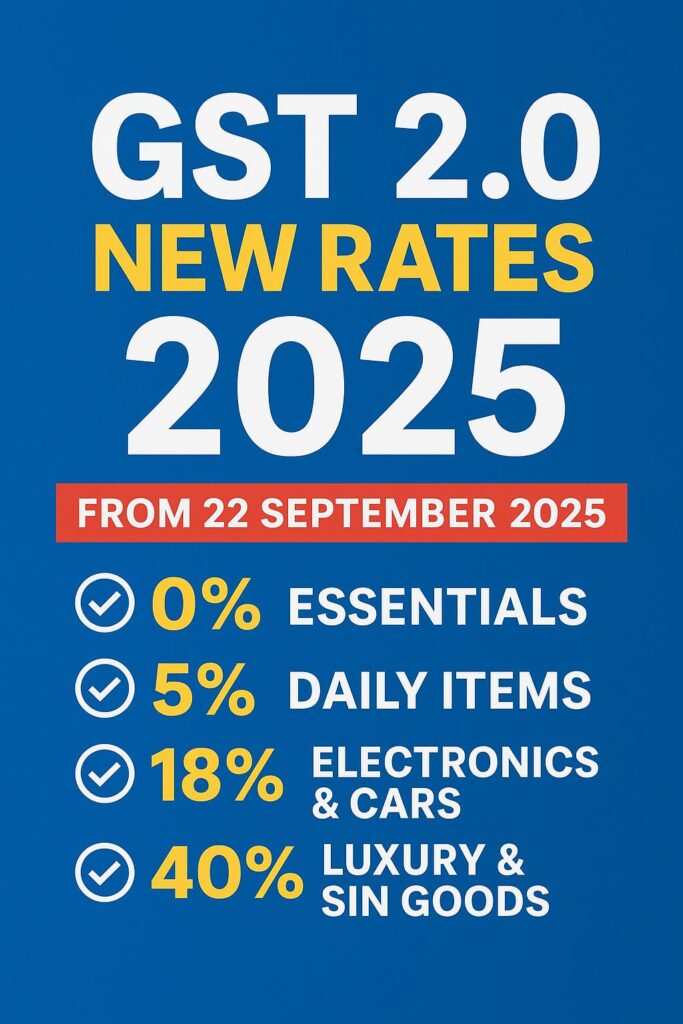
The tax structure now features just two primary slabs—5% and 18%—along with 0% for essentials and a new 40% “sin/luxury” slab. This simplifies the system and makes many products more affordable.
Key GST Changes from 22 September 2025
The government has simplified GST rates and introduced four clear categories:
- The government has simplified GST rates and introduced four clear categories:
- 5% GST (Daily Use Items) – Household goods and personal care products
- 18% GST (Most Goods & Services) – Electronics, mobiles, cars, appliances, restaurants
- 40% GST (Luxury & Sin Goods) – Premium cars, alcohol substitutes, aerated drinks, tobacco
What Becomes Cheaper: Old vs. New GST Rates
Here is a simple comparison of items that will become cheaper or costlier from 22 September 2025:
| Item Category | Old GST Rate | New GST Rate | Impact |
| Milk, paneer, chapati, UHT milk | 5-12% | 0% | Now Completely tax-free |
| Condensed milk, cheese, butter, ghee | 12% | 5% | Prices drop significantly |
| Chocolate, biscuits, noodles, sugar items | 12–18% | 5% | Daily snacks become cheaper |
| Shampoo, soap, toothpaste, hair oil | 18% | 5% | Lower cost for personal care |
| Pencils, notebooks, maps, globes | 12% or 5% | 0% | School supplies now free of GST |
| Utensils, sewing machines, tableware | 12% | 5% | Cheaper home essentials |
| Footwear, textiles | 12% | 5% | Clothing costs drop |
| Diagnostic kits, medical devices | 12-18% | 5-0% | Healthcare access improves |
| Life & health insurance premiums | 18% | 0% | Insurance becomes tax-free |
| ACs, TVs, refrigerators, electronics | 28% | 18% | Durable goods get cheaper |
| Small cars (<1200cc), bikes (<350cc) | 28% | 18% | Reduced vehicle prices |
| Cement | 28% | 18% | Infrastructure costs fall |
| Sewing machines, agricultural tools | 12% | 5% | Farming tools become more affordable |
| Aerated drinks, tobacco-related products | 28% | 40% | Become significantly costlier |
| Luxury cars, premium bikes | 28% | 40% | Higher taxation on luxury vehicles |
What Will Become Cheaper
From 22 September 2025, many goods and services will see reduced GST rates.
- Daily essentials like milk, chapati, paneer, rice, and wheat are now tax-free.
- Personal care items such as shampoo, soap, toothpaste, and hair oil will attract only 5% GST, down from 18%.
- Snacks and packaged foods like chocolates, biscuits, and noodles are now in the 5% slab.
- Electronics and appliances like TVs, ACs, refrigerators, and mobiles shift from 28% to 18% GST.
- Small cars and two-wheelers will also see a drop from 28% to 18%, reducing on-road prices.
- Construction materials like cement will now fall under 18%, helping builders and home buyers.
- Healthcare services and medicines are becoming cheaper, with 33 life-saving drugs at 0% GST.
- Insurance premiums for health and life policies will no longer attract GST.
What Will Become Costlier
While most categories get relief, some goods will see higher taxes:
- Luxury cars and premium bikes will move from 28% to 40% GST.
- Aerated drinks, alcohol substitutes, tobacco, and pan masala will also attract 40% GST.
Benefits of GST 2.0 Reform
The new GST changes benefit both consumers and businesses:
- For Families & Consumers
- Lower grocery bills with essentials going tax-free
- Cheaper healthcare with tax-free medicines and insurance
- Affordable appliances and vehicles ahead of the festive season
- Reduced education costs with school supplies becoming tax-free
Compliance Reforms for Taxpayers
Apart from rate cuts, GST 2.0 also focuses on improving compliance:
- Prefilled GST returns will be introduced to reduce errors.
- Auto refunds for exporters and small businesses will be faster.
- Unified e-commerce registration will allow sellers to register once and sell across India.
- Simpler filing system will reduce compliance costs for small and medium businesses.
Why GST 2.0 Matters
GST 2.0 is not just a tax cut; it is a structural reform that aims to:
- Boost consumption by lowering household expenses
- Increase business confidence with easier compliance
- Promote Make in India by reducing manufacturing costs
- Support healthcare and education through tax exemptions
- Balance luxury vs necessity by taxing sin goods more and essentials less
The timing of this reform, just before Diwali, is also expected to encourage festive shopping, vehicle purchases, and home appliance upgrades.
FAQs
Q. From when will the new GST changes apply?
A. The new GST rates will apply from 22 September 2025.
Q. Which items are now tax-free?
Milk, chapati, paneer, rice, wheat, school supplies, life-saving drugs, and insurance premiums are now under 0% GST.
Q. Which items will be cheaper under the new GST rates?
A. Electronics, ACs, TVs, refrigerators, cement, small cars, and two-wheelers will see lower GST at 18%.
Q. Which items will become costlier?
A. Luxury cars, premium bikes, aerated drinks, tobacco, and pan masala will move to a 40% slab.
Q. How will compliance improve?
A. The government will introduce prefilled returns, auto refunds, and single registration for online sellers to make GST easier for businesses.
Visit our website for the latest IPO updates and other financial information.