
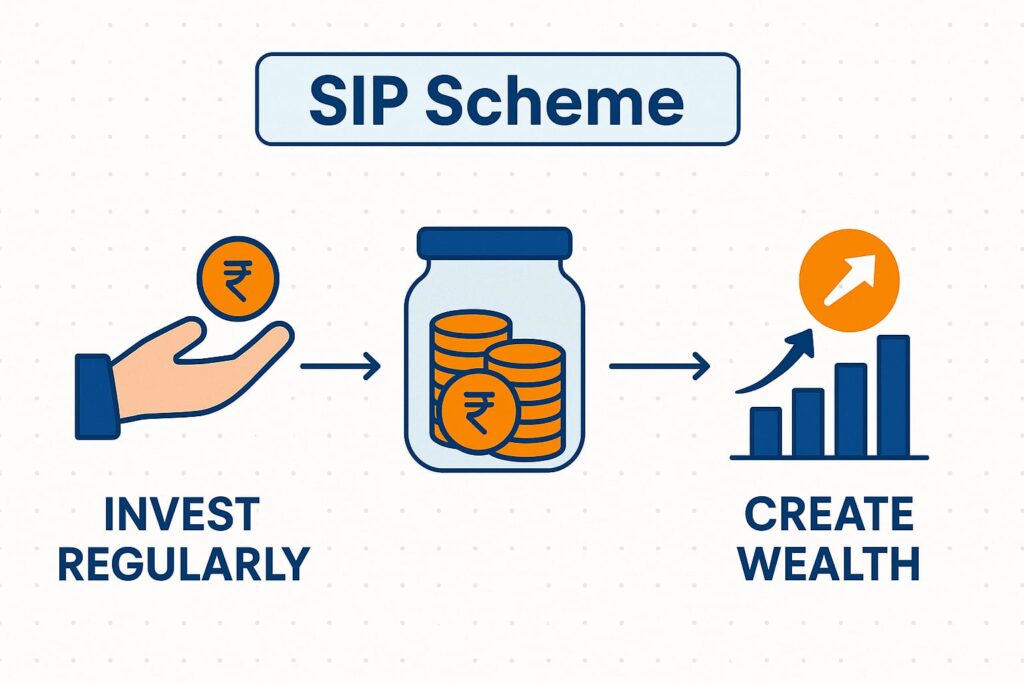
What is SIP?
A Systematic Investment Plan (SIP) allows you to invest a fixed amount regularly in mutual funds. Instead of investing a large lump sum at once, SIP helps you invest smaller amounts every month or quarter. This method builds financial discipline, spreads out investment risk, and suits both new and experienced investors. SIP makes mutual fund investing easy, affordable, and goal-oriented.
How Does SIP Work?
SIP works by investing a fixed amount of money from your bank account into a mutual fund at regular intervals—usually monthly. On the chosen date, the fund house automatically debits the amount and buys mutual fund units based on the current market price (NAV). You receive more units when the market is low and fewer units when the market is high. Over time, this helps average out the cost of investment and reduces the impact of market volatility.
Is SIP a Financial Product?
SIP is not a financial product. It is a method of investing in mutual funds. You use SIP to invest regularly in financial products like equity, debt, or hybrid mutual funds. SIP helps you build wealth over time by making small, consistent investments. It simplifies the process and encourages long-term financial planning.
Features of SIP
SIP offers several investor-friendly features that make mutual fund investing easy and effective:
- Start Small: You can start investing with just 100 per month.
- Invest Regularly: SIP lets you invest a fixed amount every month or quarter.
- Build Discipline: It helps you build a regular saving and investing habit.
- Auto-Debit Facility: The amount gets automatically debited from your bank account.
- Flexible Options: You can increase, pause, or stop your SIP anytime.
- Diversify Easily: You can invest in equity, debt, or hybrid mutual funds.
- Track Progress: You can easily monitor your SIP performance online.
Disadvantages of SIP
While SIP offers many benefits, it also has some disadvantages you should consider:
- No Guaranteed Returns: Mutual funds are market-linked, so returns may vary.
- Needs Long-Term Commitment: SIP works best when you stay invested for many years.
- May Underperform in Bull Market: Lumpsum investments may perform better during sharp market rallies.
- Exit Load Charges: Some mutual funds may charge a fee if you withdraw early.
- Not Ideal for Quick Gains: SIP is not suitable for short-term or quick-profit goals.
Rupee Cost Averaging
Rupee Cost Averaging is a smart investment strategy that SIP uses to reduce market risk. When you invest a fixed amount regularly, you buy more mutual fund units when prices are low and fewer units when prices are high.
This process averages out the cost per unit over time. You don’t need to time the market, and your investment stays steady through ups and downs. Rupee Cost Averaging helps you stay consistent, avoid emotional decisions, and build wealth gradually. It works best when you invest for the long term with discipline and patience through a Systematic Investment Plan (SIP).
Power of Compounding
Compounding helps your money grow faster over time. When you invest, you earn returns. If you reinvest those returns, they also start earning. This cycle continues, and your wealth multiplies over the years. The longer you stay invested, the more your money grows. That’s why starting early gives better results.
Compounding works best in long-term investments like SIPs and mutual funds. It turns small amounts into large sums with time.
Modes of SIP
You can invest in SIP through various easy and convenient modes:
- Online Platforms: You can use mutual fund websites, mobile apps, or trusted third-party investment portals to start your SIP anytime from anywhere.
- Banks: Many banks offer SIP services directly. You can visit the branch or use internet banking to begin your SIP.
- Financial Advisors: Financial advisors help you choose the right mutual fund and assist in setting up and managing your SIP based on your goals.
Duration of SIP
You can choose the SIP duration based on your financial goals and needs:
- Short-Term (1–3 years): Use SIP to save for emergency funds, vacations, or short-term expenses.
- Medium-Term (3–5 years): Plan for goals like buying a car, funding a wedding, or making a home down payment.
- Long-Term (5+ years): Invest for major goals like retirement, your child’s education, or long-term wealth creation.
SIP in Tax Saving Funds
You can invest in tax-saving mutual funds like ELSS (Equity Linked Savings Scheme) through SIP. ELSS qualifies for tax deductions under Section 80C of the Income Tax Act, up to 1.5 lakh per year. It has a lock-in period of 3 years and offers the dual benefit of tax savings and long-term wealth creation. By investing regularly through SIP, you reduce market risk and build a strong financial base while saving tax.
Conclusion
SIP offers a smart and steady way to invest in mutual funds. It helps you build investment discipline, benefit from market ups and downs, and grow your wealth through the power of compounding.
You can use SIP to save tax, plan for emergencies, or achieve long-term financial goals. By investing regularly and staying consistent, you make your money work harder and build a secure financial future.
1 thought on “SIP (Systematic Investment Plan) Scheme”